AI, Human Intuition, and the New Rules of Revenue

“Follow the money.”
It worked for Woodward and Bernstein, and more often than not, it’s a pretty darn good place to start when seeking to find the heartbeat of any complex pursuit, endeavor, mystery, etc.
So when we think about the implications of AI and what it means for the future of work (and workers), yes, there are jobs that are going to become marginalized. That said, the lifeblood of any economy is the ability to maximize the number of people actively contributing to it via employment, production, spending, and so on.
The people – and companies – that will succeed moving forward are the ones who understand the balance.
There’s no shortage of AI headlines out there, and most of them default to two camps: breathless hype of existential dread. The truth, however, is a lot more practical – and a lot more optimistic – especially for companies built on recurring revenue.
The future of work isn’t AI vs. humans. It’s AI + humans, aligned.
There’s no shortage of AI headlines out there, and most of them default to two camps: breathless hype of existential dread. The truth, however, is a lot more practical – and a lot more optimistic – especially for companies built on recurring revenue.
The chart below is one we keep coming back to. It breaks down how AI is actually being used across task categories, and the story it tells is encouraging.
In nearly every category, AI is showing up more as an assistant than as a replacement. That’s a critical distinction. It means that for most revenue teams, the greatest upside doesn’t come from indiscriminately slashing headcount – it comes from reducing inefficiencies and creating more time for humans to do non-robotic tasks. AI helps teams focus on what matters: judgement, relationships, strategic decisions. The parts of work that are still – and will likely remain – deeply human.
So what does this mean for revenue leaders? It means the question is no longer if AI should be part of your GTM or RevOps model. That horse is out of the barn. The better question is: Where are your people spending energy that AI can amplify rather than replace? And how do you align your operations so that adoption of AI is intentional and not chaotic?
Here’s where most companies stall: they see the potential, maybe even spin up an AI workstream, but they don’t tie it to real revenue outcomes. Or worse, they rush into tooling without clearing up the bottlenecks that are already slowing them down.
The focus for companies at critical stages (growth, turnaround, exit, etc.) needs to be on deployment of AI without losing the human signal. Pipeline conversion. Account expansion. These aren’t just spreadsheet problems. They’re systems problems, and AI – when applied with purpose – can absolutely improve performance across each as long as it’s grounded in clean data, aligned teams, and clear goals.
Is automation a key component of AI? For sure. That said, the purpose of automation as a concept is enablement and freeing up time. What makes a business grow isn’t just tech. It’s traction. And traction happens when people, processes, and tools move in the same direction – fast.
If you’re already experimenting with AI inside your organization – good. You’re ahead of the curve. If you’re not – start small, but start. Because the gap between companies using AI and those still “evaluating” is widening, rapidly. Not just in output, but in valuation, retention, and go-to-market momentum.
AI won’t replace your revenue team entirely. But a team using AI – intelligently, responsibly, and with the right structure and roadmap – will outperform a team that isn’t.
Copyright 2025 – NorthShift Consultancy Group, LLC
Recent Posts

Is The AI Analyzing Your Deals Also Exposing Them?
An examination of how AI-powered deal and portfolio tools handle confidential data during normal operation — and why the architecture of those…
The Invisible Data Problem
An examination of how the intelligence and analytics tools widely deployed across private equity portfolios handle confidential company data — and why…
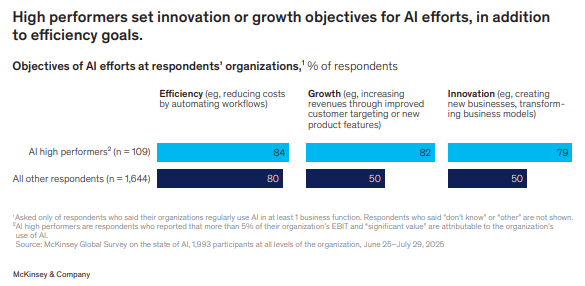
MP/GP Warning: Your LPs Don’t Care That You “Have AI.” They Care What It Changed.
LPs and boards are done funding “AI ambition.” They’re asking for proof—measurable, repeatable, auditable proof—that AI is improving the investment and execution…