Tariffs, Volatility, and the Portfolio Blind Spots You Can’t Afford Right Now.
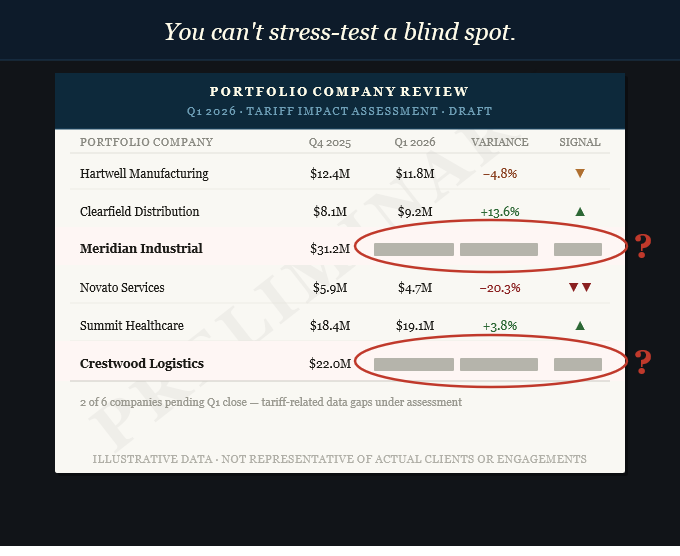
The past few weeks have reminded every GP managing a lower middle market portfolio of something they already knew but maybe hadn’t stress-tested recently: the macro doesn’t care about your hold period.
Tariffs shifting week to week. Input costs repricing mid-quarter. Customers delaying purchasing decisions. Sales pipelines behaving in ways that don’t match the forecast from ninety days ago. For a $100M revenue portco with thin operational infrastructure, that’s not just noise — that’s an EBITDA problem in the making.
The GP response, predictably and correctly, has been to model downside scenarios. The challenge is that scenario modeling is only as good as the underlying revenue intelligence feeding it. And for most lower middle market portfolio companies, that intelligence is thinner than anyone wants to admit. Not because the GPs aren’t smart — they are — but because the data infrastructure at those companies was never built for this kind of interrogation.
The firms navigating this moment well aren’t necessarily the ones with the most sophisticated macro models. They’re the ones who knew — before the uncertainty arrived — exactly where their revenue was coming from… which growth was real… and where the first cracks would appear under pressure.
So what happens? The sponsor runs stress tests on numbers that are already sixty to ninety days stale. They price in tariff exposure without a clear view of which customer segments are most vulnerable to demand elasticity. They make portfolio decisions against a revenue picture that feels solid but is actually a snapshot of a world that no longer exists.
The firms navigating this moment well aren’t necessarily the ones with the most sophisticated macro models. They’re the ones who knew — before the uncertainty arrived — exactly where their revenue was coming from, how sticky each relationship was, which growth was real and which was on borrowed time, and where the first cracks would appear under pressure.
That’s not a luxury read for the good times. That’s operating infrastructure. And right now, it’s the difference between a proactive conversation with management and a reactive one.
The storm doesn’t care if you’re ready. But it does reward the ones who were.
Recent Posts
Is The AI Analyzing Your Deals Also Exposing Them?
An examination of how AI-powered deal and portfolio tools handle confidential data during normal operation — and why the architecture of those…
The Invisible Data Problem
An examination of how the intelligence and analytics tools widely deployed across private equity portfolios handle confidential company data — and why…
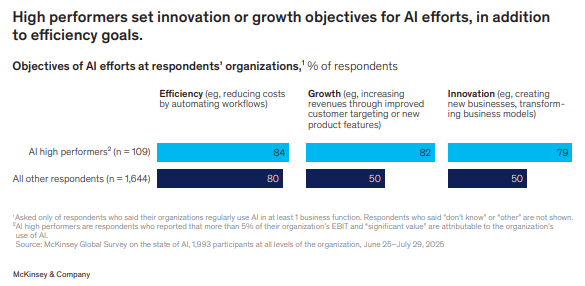
MP/GP Warning: Your LPs Don’t Care That You “Have AI.” They Care What It Changed.
LPs and boards are done funding “AI ambition.” They’re asking for proof—measurable, repeatable, auditable proof—that AI is improving the investment and execution…